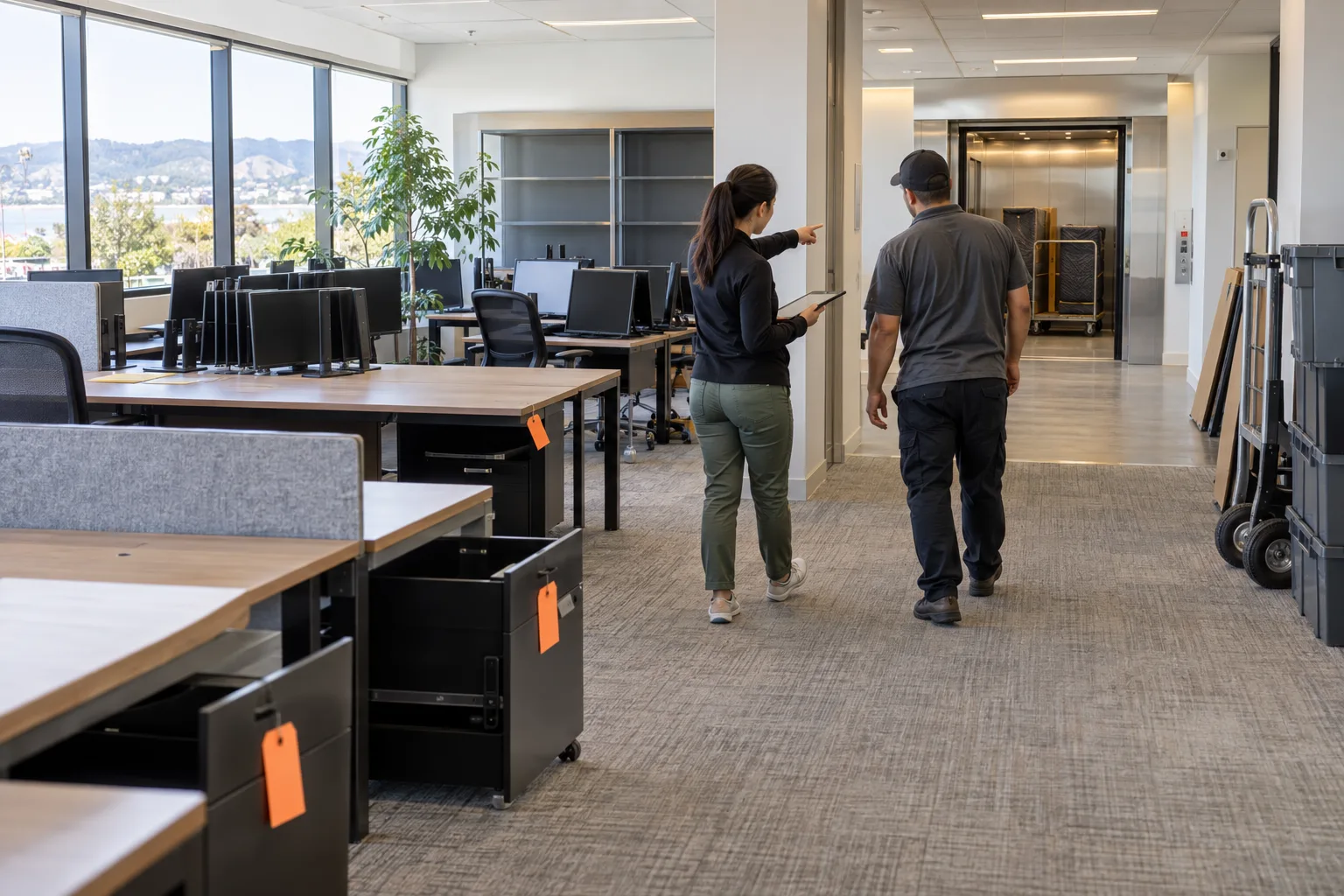
An office cleanout goes faster when every room has a boundary, every item has an owner, and the loading route has already been walked. Start with the condition required at handoff, then work backward through access, records, electronics, furniture, and exceptions.
Set the handoff condition
Write down whether the space must be empty, broom-clean, restored to a lease condition, or only cleared of selected items. Name the person who can approve a scope change on pickup day.
Mark fixed building property, leased equipment, artwork, plants, keys, and anything moving to the new office. A floor plan or room list prevents the phrase “everything” from becoming an expensive mistake.
Inventory by room and stream
List workstations, conference rooms, reception, storage, copy areas, break rooms, and closets. For each one, separate furniture, records, electronics, reusable supplies, trash, and items on hold.
Empty desks, cabinets, lockers, and bookcases. Closed drawers create uncertainty and can hide confidential material or personal property.
Control records and electronics
Apply the organization’s retention, legal-hold, privacy, and data-destruction rules before releasing files or devices. A removal crew should not decide what happens to a hard drive or employee record.
Keep monitors, laptops, printers, batteries, lamps, toner, and data-bearing equipment in labeled groups. California treats some electronics and components differently from ordinary solid waste.
Walk the loading route
Measure the narrowest doorway and tightest turn. Record stairs, elevator size and reservation, dock hours, card access, floor protection, parking, and the carry distance to the vehicle.
If the building requires a certificate, loading reservation, security escort, or after-hours window, arrange it before the pickup day.
Use this release checklist
Scope by room; keep/move/remove tags; empty drawers; record and IT release; leased-item check; elevator or dock reservation; floor protection; contact on site; final room sweep; handoff approval.
Sources and limits
This guide uses the published service scope plus current California and San Luis Obispo County waste guidance where relevant. Confirm facility acceptance, building rules, legal requirements, and the actual service scope before work begins.