Restaurant cleanouts after utilities and ownership are settled
Clear dining furniture, loose fixtures, storage contents, and released equipment once the owner has separated leased assets and qualified trades have handled utility connections.
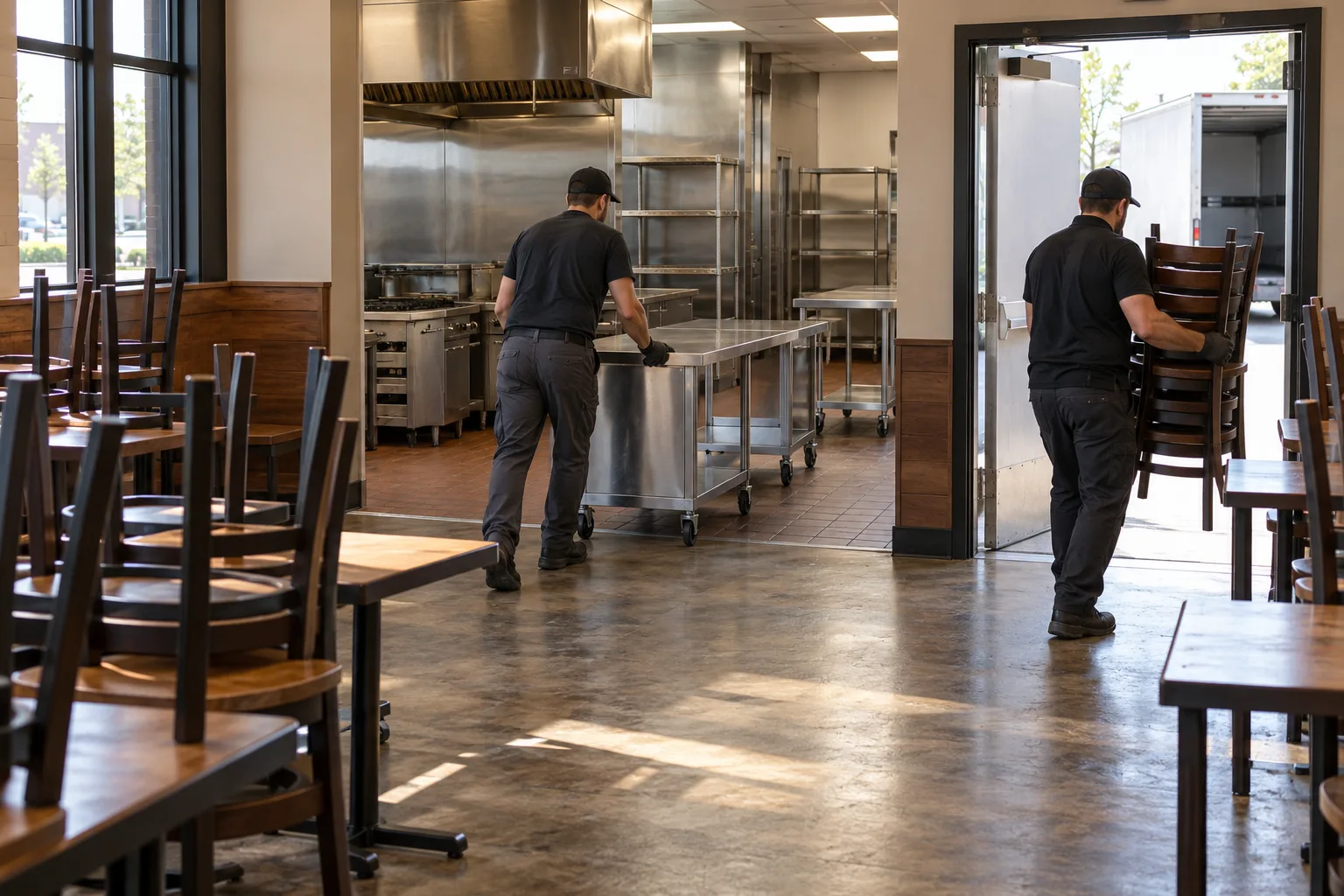
Items and situations in scope
Confirm the exact material during the estimate. The list below describes common approved nonhazardous categories, not automatic acceptance.
- Dining tables, chairs, and booths when detached
- Loose shelving and dry-storage contents
- Released smallwares and service equipment
- Disconnected freestanding appliances
- Front-of-house décor and nonhazardous debris
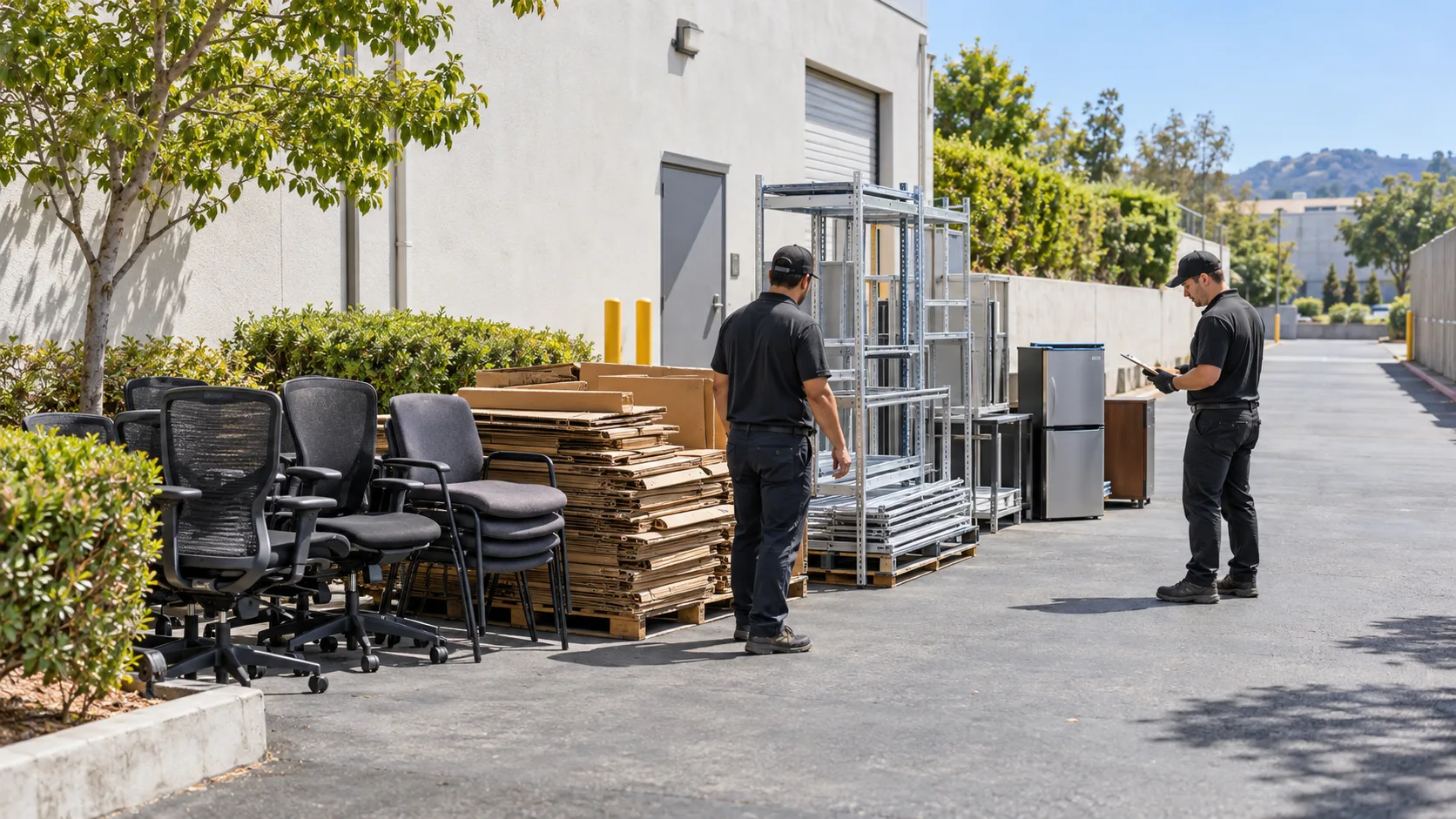
Prepare the property and the route
- 01Confirm which equipment is owned, leased, or part of the building.
- 02Have qualified trades disconnect gas, power, water, fire-suppression, and refrigerant systems.
- 03Remove food, grease, chemicals, and pressurized containers from the general scope.
- 04Measure the equipment, service doors, turns, and loading route.
What shapes the estimate
Share these details on the first call. Clear inputs reduce surprises when the team reviews the job on site.
Questions about restaurant cleanouts
Will the crew disconnect cooking equipment?
Utility disconnection is not part of a general hauling scope. Gas, electrical, water, hood, fire-suppression, and refrigerant work should be completed by the appropriate qualified trade first.
What should happen to leased equipment?
Tag and exclude it until the lessor provides release or pickup instructions. Ice machines, dish machines, beverage equipment, and point-of-sale hardware may be leased.
Can grease or chemicals be hauled?
Grease, cleaners, pressurized containers, fuels, and other hazardous or regulated materials must stay out of the general junk-removal load.
Restaurant cleanout prep: ownership, utilities, and the loading path
Decide what is owned, disconnected, clean enough to handle, and small enough to reach the service door.
Read the guideReview the route, then request the estimate
Call with the property type, item groups, loading route, heavy pieces, and preferred timing.