Nonhazardous construction debris, sorted before it moves
Keep renovation work areas usable by staging clean lumber, cabinetry, metal, cardboard, and other approved nonhazardous debris in defined material streams.

Items and situations in scope
Confirm the exact material during the estimate. The list below describes common approved nonhazardous categories, not automatic acceptance.
- Clean lumber and cabinetry
- Drywall offcuts and small approved quantities
- Metal, fixtures, and empty packaging
- Carpet and flooring when approved
- Nonhazardous tenant-improvement debris
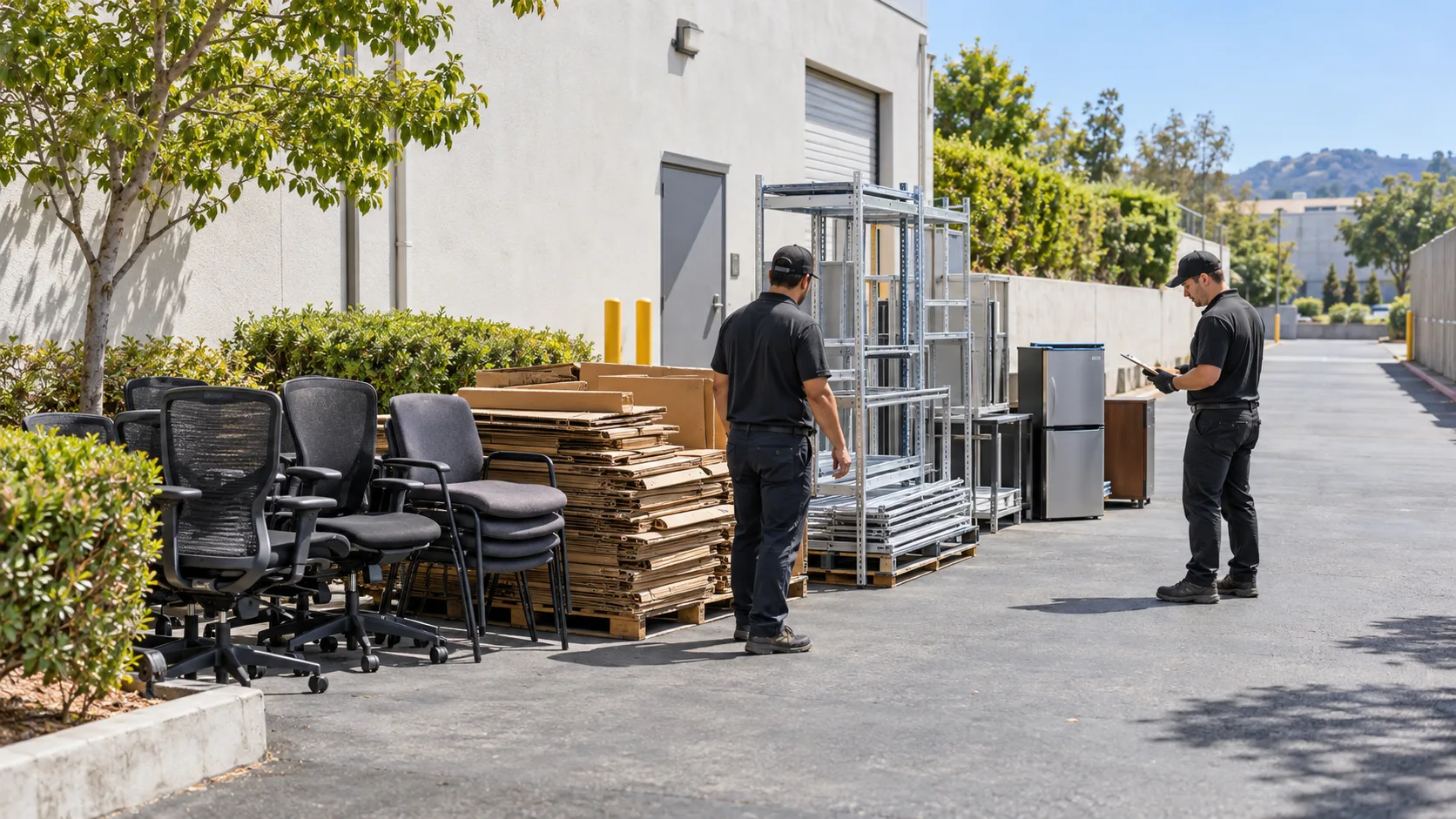
Prepare the property and the route
- 01Identify the project jurisdiction and any diversion documentation requirement.
- 02Separate concrete, metal, clean wood, cardboard, and mixed debris where practical.
- 03Keep paint, chemicals, asbestos-containing material, batteries, lamps, and unknown dust out of the load.
- 04Protect finished surfaces and keep emergency routes open.
What shapes the estimate
Share these details on the first call. Clear inputs reduce surprises when the team reviews the job on site.
Questions about construction debris removal
Is all construction material accepted?
No. The scope is limited to approved nonhazardous material. Paint, chemicals, asbestos-containing material, pressurized containers, contaminated debris, and unknown substances require a different handling path.
Why separate material streams?
Separated loads are easier to describe, price, and route. Some facilities accept specific recyclable construction materials but not a mixed load.
Do local projects have diversion rules?
They may. San Luis Obispo County IWMA advises project teams to check the current building-department requirements and confirm facility acceptance before hauling.
A practical sorting guide for commercial renovation debris
Keep clean wood, metal, cardboard, drywall, fixtures, and mixed debris distinct before hauling.
Read the guideReview the route, then request the estimate
Call with the property type, item groups, loading route, heavy pieces, and preferred timing.